 en
en 
 de
de it
it fr
fr es
es ru
ru jp
jp ro
ro







 Budapest Operetta Theater
 Tue 16 Jun 2026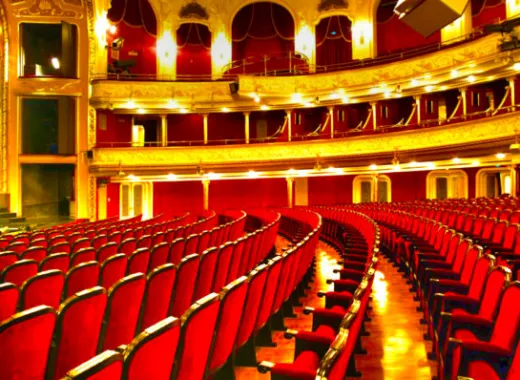
History
The history of the Operetta Theatre begins with the name of Károly Somossy who used to run an Orpheum in the building at 17 Nagymező street since 1884. In 1890 he bought the house and had it transformed into an entertainment house by the Felner and Helmer company, which opened in 1894. Its interior design was exalted by all accounts. Then the venture went bankrupt in 1899, Károly Albrech restaurant keeper took over the operation and from 1902 a Variety Show started to work there with the name of Fővárosi Orfeum, under the management of Imre Waldmann.
The Americal theatre entrepreneur, Ben Blumenthal, after having purchased the Vígszínházm also rented the Orpheum in 1922. The refurbished theatre opened its gates on 23 December 1922 first as Fővárosi Színház, a year later taking up the name of Fővárosi Operett Színház.
From 1929 to 1930 the Fővárosi Művész Színház (Arts Theatre) worked there with leadership of Gyula Kabos. From September 1930 the theatre took up again its old name and was lead by Dezső Sebestyén but it was forced to close several times because of the scanty attendance. From 1936 to 1938 it hosted the Arts Theatre of Artúr Bárdos.
After the siege of Budapest the theatre was opened in march 1945 with the popular operetta by Imre Kálmá, the Csárdáskirálynő. This soon became the biggest Hungarian and international success of the play. The theatre was nationalized in 1949, and Margit Gáspár appointed as director. The general renovation of the building had already been decided in 1960 but it was only realized in the second part of the sixties. In 1966 the company moved into the former building of the Petőfi Theatre, and the reconstruction started according to the plans of the Középüettervező Vállalat (Company of Public Constructions). The designers were: Halmi Iván, Pozsay Csaba és Vajda Ferenc. The festive opening was held on 17 April 1971, again with a staging of Csárdáskirálynő. This was the thousandth performance of Imre Kálmán’s operetta.
Imre Halasi, who used to be the manager of the theatre from 1996 to 2000, changed the name of the theatre form 1. January 1998. Since then it is called Budapesti Operettszínház (Budapest Operetta Theatre). Another reconstruction of the building can be tied to the name of Halasi, the aim of which was the restoration of the original milieu. The designer, Mária Siklós, tried to free the building from the construction errors that got there during the several earlier reconstruction.
In March 2002 a studio theatre for 100 people was inaugurated, the so called Storage Room Theatre situated in the theatre’s wing in Mozsár street.
Architectural description
The unique character the theatre comes from the interesting features of the plot division. The main facade and the entrance of the Budapest Operetta Theatre opens from the Nagymező Street, however the functions of the theatre are built in to the inside courtyards framed by houses between the Andrássy, Nagymező and Mozsár streets. Therefore the mass of the auditorium and the flyloft is not perceptible from the street.
The two-storey mass of the main facade was built at the turn of the century, according to the plans of the famous Viennese theatre designer duo, Ferdinand Fellner and Herman Helmer. The entrance axe is surrounded at the entire height of the building by arched closed pediment. The entrance projection is articulated with two opening axes. The windows on the first floor are squared closed, while those on the second floor are arched. On the attics closing this part of the building on the complete with of the projection stands a lyre indicating the function of the building.
The side wings are articulated with three opening axes and pilasters, which surround the first and second floors. Between the ground and first floor a dividing edge and balusters run around. The first floor openings are arched, while those on the second floor are squared, closed with decorative frame and keystone. The ground floor surface is horizontally pointed. The wall plane of the storeys is punch coloured; the pilasters, the sides, the ornaments and the window frames are white.
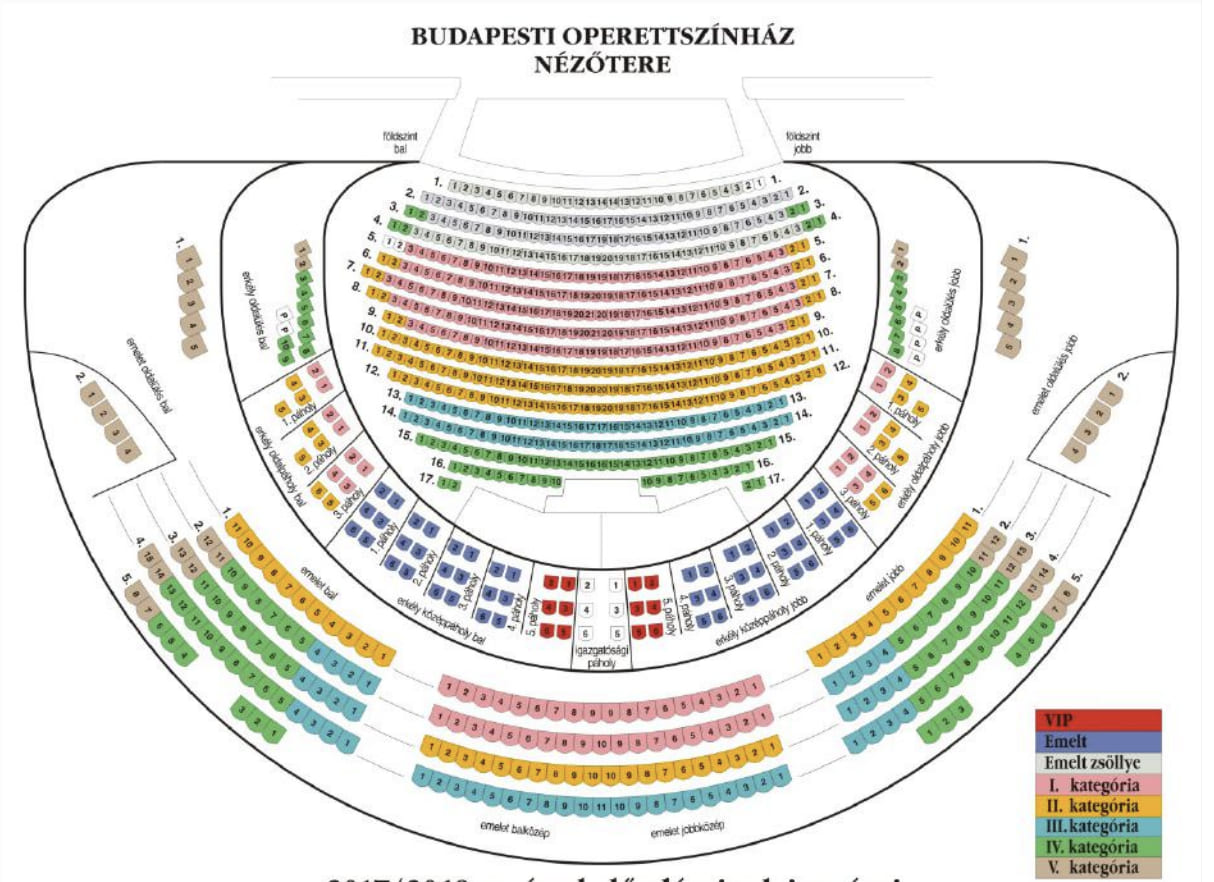
The auditorium is fan-shaped with balconies on the first and second floor. The stage is framed with accented proscenium wall and proscenium boxes.



 RM EUROPA TICKET GmbH
 Call now
 Book now