
 EN
EN DE
DE IT
IT FR
FR ES
ES RU
RU JP
JP RO
RO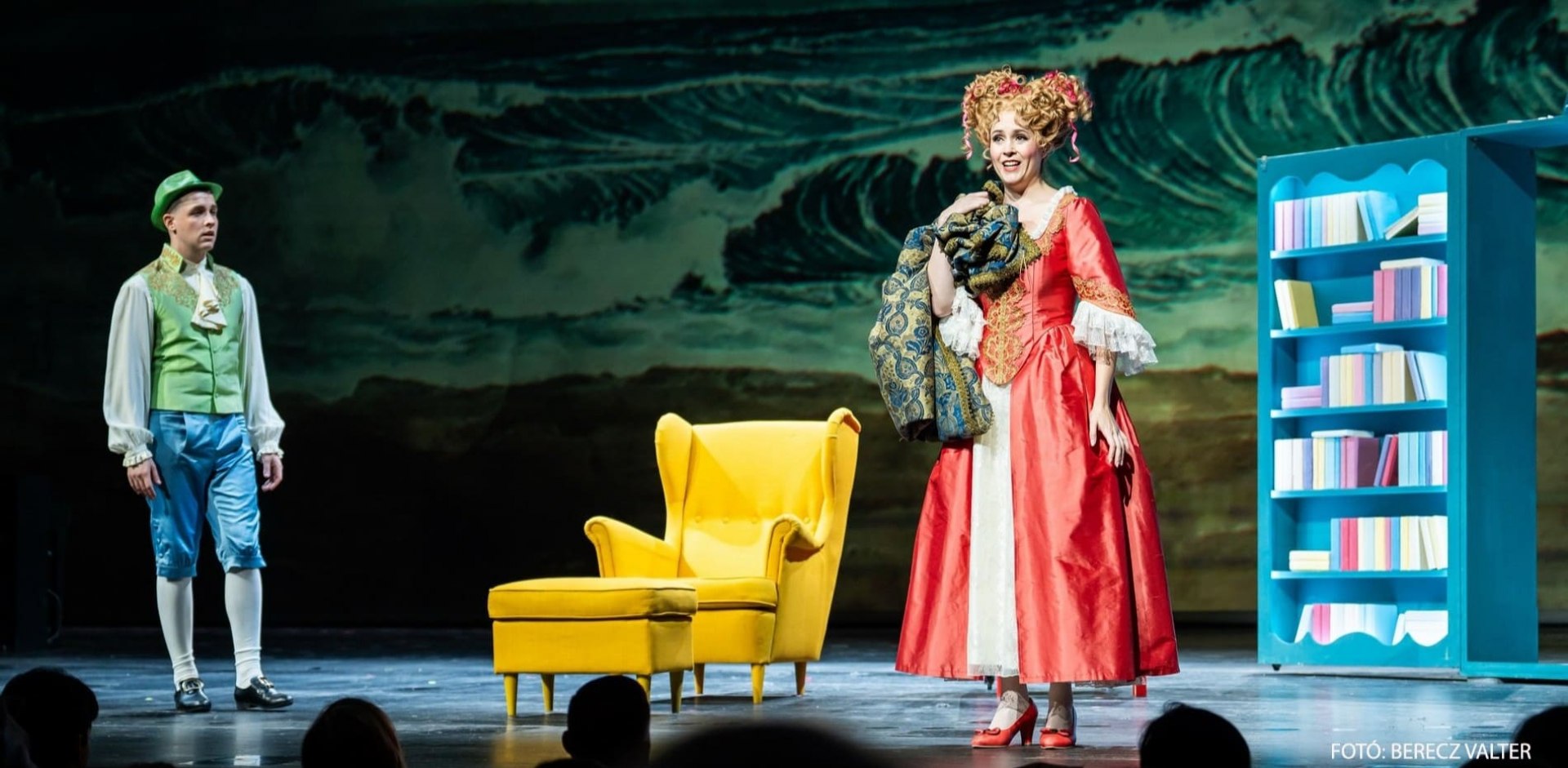
© Berecz Valter
Bastien and Bastienne, The Telephone
Order tickets
 December 2029 December 2029 | ||||||
|---|---|---|---|---|---|---|
Mo | Tu | We | Th | Fr | Sa | Su |
Bastien und Bastienne / The Telephone – Wolfgang Amadeus Mozart / Gian Carlo Menotti
Mix | Singspiel | Comic opera
Running time: 1 hour 30 minutes including one intermission
Language: Hungarian
Surtitle: Hungarian
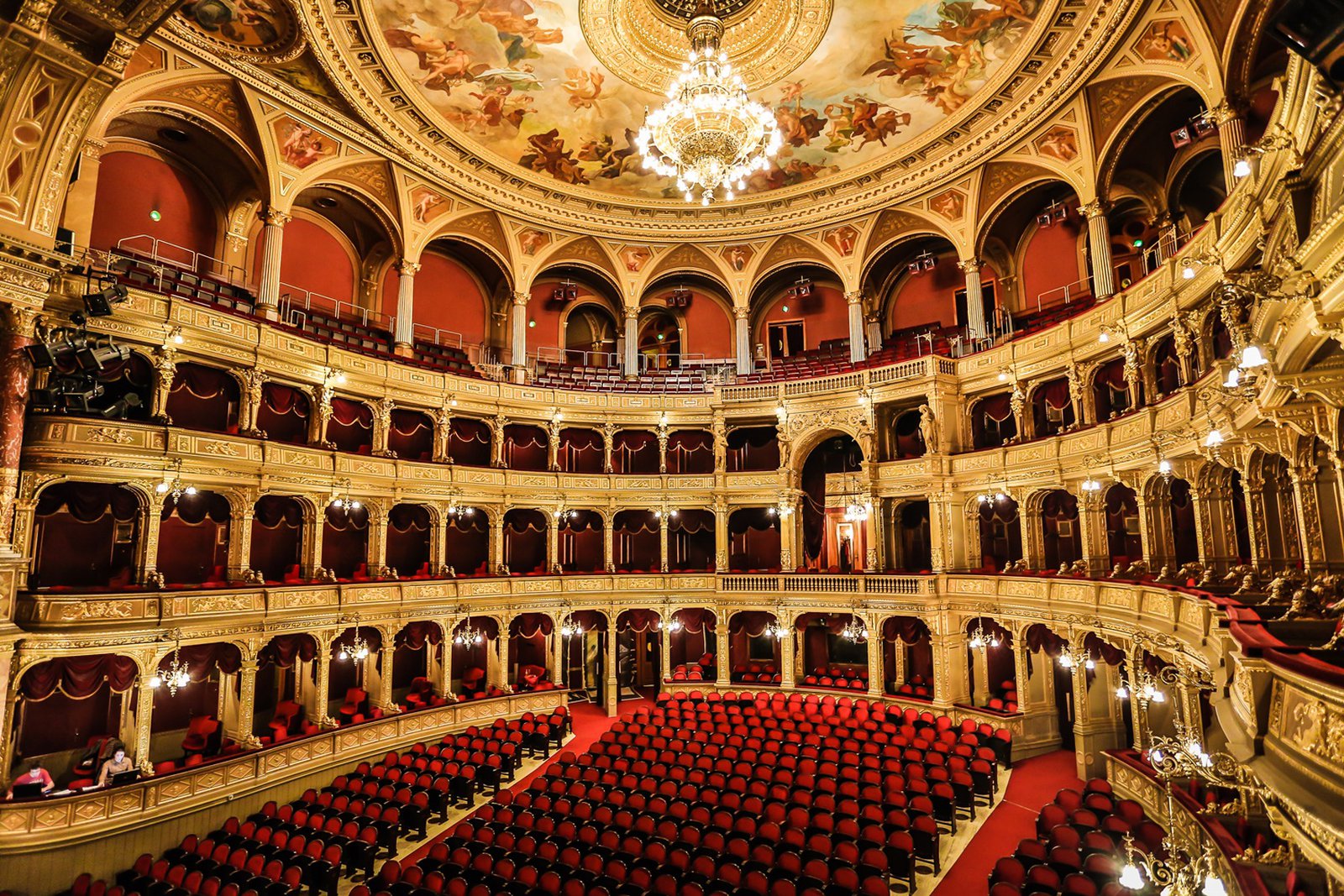
Wolfgang Amadeus Mozart was barely 12 years old when he composed his bucolic little opera Bastien and Bastienne, which was performed at an “alternative venue”, the garden of a certain Doctor Mesmer. This is the very same Mesmer whose magnetic invention Mozart later alluded to with such comic effect toward the end of his operatic career, in Così fan tutte. As a counterpart to this charming love story, the evening also presents Gian Carlo Menotti’s 1947 one-act opera, which at its premiere was a delightful jest. Today, however, it stands as a tragicomic diagnosis of our times: mobile communication has rewritten our world and added new layers of meaning to the work. Andrea Valkai’s staging (in the case of The Telephone, adapted from András Almási-Tóth’s original production) has been placed in an alternative venue: on the proscenium of the auditorium of the Opera House, that is, on a raised platform above the orchestra pit, beneath Károly Lotz’s famous ceiling fresco.
Parental guidance: The performance is not recommended for children under 6 years of age.
Bastien und Bastienne
Wolfgang Amadeus Mozart was barely 12 years old when he composed his bucolic little opera, Bastien et Bastienne, which was performed at an “alternative location”, in the garden of a certain Doctor Mesmer whose studies of magnetism are referred to with such comical effect towards the end of Mozart's career as an opera composer, namely, in Così fan tutte. According to the sources, the young Wolfgang wrote Colas's wizard aria in gibberish himself (“Diggi, daggi, schurri, murri...”), and in the overture we can discover a real curiosity: the main theme is practically the same main theme in the first movement of Beethoven's Eroica composed much later. Bastien is presented to young audiences as a love story with a bit of magic...
The Telephone
When it premiered in 1947, Menotti’s one-act opera was a funny jab at the modern world. But today it is a tragicomic view of a symptom of our modern world: mobile communication has redefined our world and has given new meaning to the piece. Our production places the story in the business of a modern big city and tells the story of not just two people, but the generation that lives its life over the phone, in emails, and on social media platforms while slowly forgetting to look into other people’s eyes. Chamber opera with contemporary physical theatrical elements and (maybe) a happy end. András Almási-Tóth’s production was adapted for the auditorium of the Opera House by Andrea Valkai.
Program and cast
Bastien und Bastienne
Conductor: Nátán Sugár
Bastien: Gergely Halász (opera studio)
Bastienne: Gabriella Rea Fenyvesi (opera studio)
Colas: Bence Pataki
Featuring the Hungarian State Opera Orchestra
Director: Andrea Valkai
Set and costume designer: Zsófia Mihály-Geresdi
Dramaturg, spoken text: Enikő Perczel
Shadow play choreographer: Domokos Kovács
Animation designer: Zsombor Czeglédi
Composer: Wolfgang Amadeus Mozart
Librettist: Friedrich Wilhelm Weiskern, Johann Andreas Schachtner, Johann Heinrich Friedrich Müller
The Telephone
Conductor: Nátán Sugár
Lucy: Gabriella Rea Fenyvesi (opera studio)
Ben: Gergely Halász (opera studio)
Telephone: N. N.
Featuring the Hungarian State Opera Orchestra
Hungarian translation by Klára Huszár
Set to the Opera House's stage based on András Almási-Tóth's production by Andrea Valkai
Set designer: Nikon One
Costume designer: Krisztina Lisztopád
Choreographer: Klára Pataky
Composer: Gian Carlo Menotti
Librettist: Gian Carlo Menotti
Hungarian State Opera
STANDING ROOM TICKETS - INFORMATION IN CASE OF A FULL HOUSE!
If all the seats are sold out for the selected time, but you still want to see the production on that day, 84 of the extremely affordable standing seats will be sold at the theatre, 2 hours before the start of the performance, with which you can visit the gallery on the 3rd floor. Tickets can be purchased at the ticket office of the Budapest Opera House. We would like to draw your attention to the fact that the stage can only be seen to a limited extent from the standing places and the side seats, but at the same time, following the performance is also supported by television broadcasting on the spot.
The Opera House is not only one of the most significant art relic of Budapest, but the symbol of the Hungarian operatic tradition of more than three hundred years as well. The long-awaited moment in Hungarian opera life arrived on September 27, 1884, when, in the presence of Franz Joseph I. the Opera House was opened amid great pomp and ceremony. The event, however, erupted into a small scandal - the curious crowd broke into the entrance hall and overran the security guards in order to catch a glimpse of the splendid Palace on Sugar út. Designed by Mikós Ybl, a major figure of 19th century Hungarian architecture, the construction lived up to the highest expectations. Ornamentation included paintings and sculptures by leading figures of Hungarian art of the time: Károly Lotz, Bertalan Székely, Mór Than and Alajos Stróbl. The great bronze chandelier from Mainz and the stage machinery moda by the Asphaleia company of Vienna were both considered as cutting-edge technology at that time.
Many important artists were guests here including Gustav Mahler, the composer who was director in Budapest from 1887 to 1891. He founded the international prestige of the institution, performing Wagner operas as well as Magcagni’ Cavalleria Rusticana. The Hungarian State Opera has always maintained high professional standards, inviting international stars like Renée Fleming, Cecilia Bartoli, Monserrat Caballé, Placido Domingo, Luciano Pavarotti, José Cura, Thomas Hampson and Juan Diego Flórez to perform on its stage. The Hungarian cast include outstanding and renowed artists like Éva Marton, Ilona Tokody, Andrea Rost, Dénes Gulyás, Attila Fekete and Gábor Bretz.
© Berecz Valter

Related events